
Daily POP Crossword Puzzles
Puzzle Nation AppsWord
4.21.69K Reviews
- Version
- 4.2.4
- Installs
- 100.00K
- Age Rating
- Everyone
Screenshots
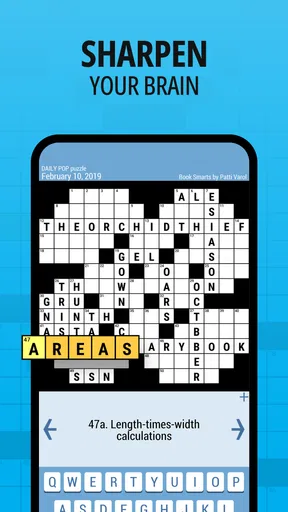
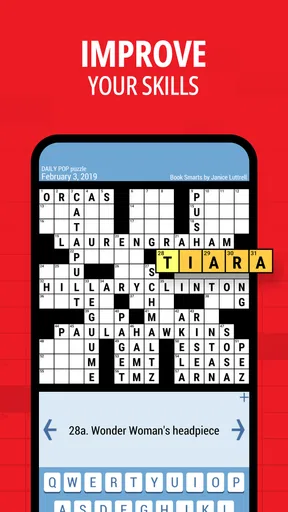
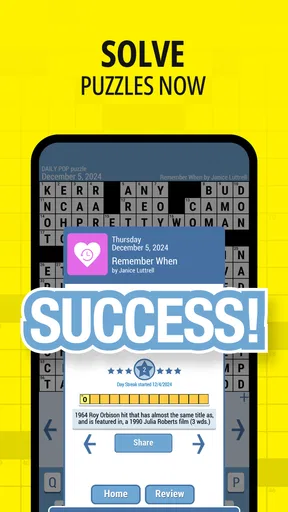
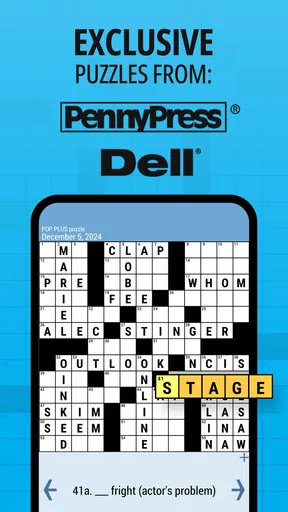
Our Review of Daily POP Crossword Puzzles
 Analysis by Appyee
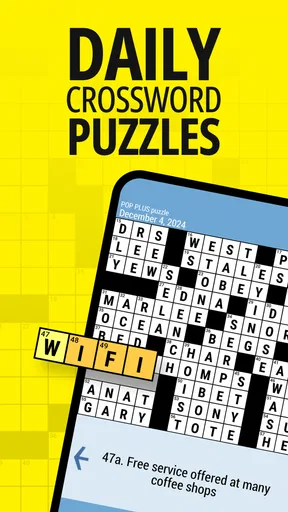
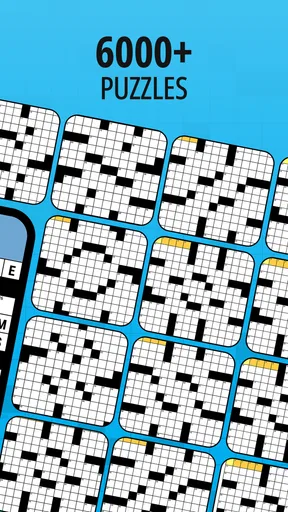
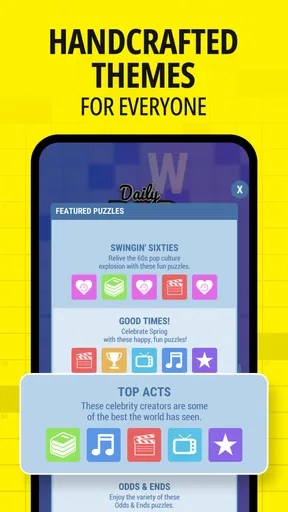
I enjoy word games most when they give me a small, satisfying challenge without demanding a long session. Daily POP Crossword Puzzles takes that approach through a pop-culture-focused crossword format. It is a free word game from Puzzle Nation Apps, aimed at players who like familiar entertainment references as much as traditional clue solving. After spending time with it, I found its main appeal quite clear: the themes make the puzzles feel more approachable than a very formal newspaper-style crossword, while still leaving enough room for a few genuine head-scratchers.
The game has a 4.2 average from around 5.7 thousand ratings, with more than 100 thousand installs. Those figures suggest a healthy audience for a fairly specific type of puzzle: short, accessible crosswords built around popular culture. It is rated Everyone, so it is an easy recommendation for families and casual players who want a light brain workout rather than an intense or mature game.
Why the pop-culture focus changes the crossword experience
The defining capability here is not simply that the game contains crosswords. It is the way recognizable pop-culture knowledge becomes part of the solving process. Instead of treating every clue as an abstract vocabulary test, the game invites me to connect names, phrases, characters, entertainment topics, and everyday references with the crossing letters already on the board.
That changes the rhythm considerably. In a conventional crossword, I may rely heavily on broad vocabulary, obscure definitions, or specialist knowledge. In Daily POP Crossword Puzzles, a clue can become much easier once I recognize its cultural context. The result is a more welcoming experience for someone who enjoys movies, television, music, celebrities, and general entertainment but does not consider themselves a serious crossword expert.
The pop-culture angle also gives each puzzle a stronger personality. A standard grid can sometimes feel like a collection of unrelated clues. Here, the subject matter helps create a reason to keep going. When I know the theme, solving one answer often gives me the letters needed to unlock several nearby entries. That sense of momentum is important on a phone, where I am usually playing in spare moments rather than settling in for a long, uninterrupted session.
The strongest feature is the way familiar references lower the entry barrier without removing the satisfaction of deduction. I still need to read the clue carefully, judge the answer length, and use crossing letters, but I am not starting from a completely cold vocabulary test. For casual players, that balance is more inviting than a crossword that seems designed to reward only experienced solvers.
What solving feels like on a phone
On a mobile device, a crossword needs to be readable and easy to control because the entire experience depends on entering answers without breaking concentration. The basic appeal of this format is that I can approach a puzzle in small bursts: solve a few clues, pause, and return later when I have more time. That makes it a natural companion for a commute, a coffee break, or the quiet few minutes before bed.
I found that the best way to play is to avoid treating every clue as a demand for an immediate answer. I start with the entries that feel obvious, then use those letters to narrow down the harder ones. With pop-culture clues, this is particularly useful because partial answers can trigger recognition. A name or phrase that seems impossible with no letters may become obvious once the grid supplies its first and last letters.
One practical habit makes a noticeable difference: I separate knowledge problems from wording problems. If I know the subject but cannot fit the answer, I check the number of spaces and the crossing letters before assuming I have forgotten something. If I do not recognize the reference at all, I move to another part of the grid instead of spending too long guessing. That keeps the game relaxing rather than turning a casual session into a frustrating quiz.
The game’s free entry point is another important part of its appeal. I can try the core experience without paying upfront, which makes it easy to decide whether the style suits me. There are in-app purchases ranging from under a dollar to around fifty dollars per item, so I would pay attention before confirming any optional purchase. For me, the sensible approach is to treat the free version as a test of the game’s pacing and subject matter, not as a promise that every convenience will always be available without cost.
A realistic everyday session
Imagine having ten minutes between errands. A long strategy game would be awkward because it may require setup, while a competitive multiplayer game could make a short break feel pressured. This crossword format fits better. I can open a puzzle, fill in the clues I recognize, use the resulting letters to make progress, and stop when I need to leave.
That same flexibility works for a shared session. I can hand the phone to a friend or family member when a clue touches on a show, performer, or cultural reference one of us knows better. The game then becomes a small conversation starter rather than a solitary test. One person may identify the reference, while the other works out how it fits the grid. That collaborative quality is a genuine strength for a word game with an Everyone rating.
It also works well for players who want to maintain a daily puzzle habit without committing to a serious study routine. The short-session structure gives me a reason to return, but the pop-culture framing keeps the activity more playful than academic. I would recommend it to someone who wants to exercise recall and spelling while still feeling entertained.
How I handle difficult clues
The most useful solving workflow is to build outward from certainty. I fill in answers I know, look for intersections that create recognizable fragments, and then revisit clues that initially seemed vague. This is more effective than moving through the grid in strict order because crossword solving is built around information flowing between entries.
For pop-culture material, I also try to think in categories rather than isolated facts. A clue that sounds like a title may require a person, a character, a phrase, or a broader entertainment term. Asking what kind of answer the clue is seeking helps prevent random guesses. When several letters are available, I test the answer against both the clue and the grid instead of accepting the first familiar word that comes to mind.
A useful trade-off is that the game can reward broad cultural awareness more than deep word-game technique. If I follow entertainment news and recognize common references, some puzzles may move quickly. If my interests are different, the same clues may feel less accessible even when my general vocabulary is strong. That is not a flaw in the format, but it is important to understand before downloading it.
Where the game is less convincing
The same focus that makes the game approachable can narrow its appeal. Players looking for difficult, literary, cryptic, or highly technical crosswords may find the pop-culture direction too lightweight. This is not the best choice if my main goal is to train advanced crossword conventions or tackle dense wordplay. A dedicated newspaper crossword or a specialist puzzle app would be a better fit for that purpose.
There is also a difference between recognizing a reference and enjoying it. A clue can be technically familiar but still feel uninteresting if the subject is outside my personal tastes. Because the game leans on entertainment knowledge, the experience depends partly on whether its chosen topics match what I already know. Someone who prefers pure vocabulary puzzles may find the theme distracting rather than helpful.
The free-to-play structure deserves a measured view as well. The game costs nothing to start, but optional items can reach around fifty dollars per purchase. That does not automatically make the model unsuitable, yet I would recommend checking the purchase prompt carefully and deciding in advance whether I want to spend anything. For a relaxed puzzle game, unexpected spending would undermine the very convenience that makes it attractive.
Another limitation is the risk of uneven difficulty from the player’s perspective. A puzzle based on a familiar reference may feel effortless, while one built around an unfamiliar topic can create a sharp jump in challenge. That variation can be enjoyable when I am in the mood for discovery, but it can also be irritating if I want a consistently measured progression. Players who prefer predictable difficulty should keep that possibility in mind.
Who gets the most from it
I think Daily POP Crossword Puzzles is best for casual word-game players who want recognizable themes, compact sessions, and a gentle reason to return. It suits someone who likes entertainment trivia but does not necessarily want a separate quiz game. It is also a good option for families because the Everyone rating makes it broadly approachable, and solving together can turn unfamiliar clues into shared discussion.
It may also appeal to experienced crossword players who want a lighter change of pace. After working through demanding puzzles, I can see the value in opening something more accessible, especially when I want the satisfaction of filling a grid without committing to a difficult challenge. The game’s category gives it a clear identity, so it does not need to compete directly with serious crossword platforms to be worthwhile.
I would be more cautious about recommending it to players who dislike pop culture, want completely offline-focused puzzle sessions, or expect every clue to test formal vocabulary. It is also not my first choice for someone seeking a competitive leaderboard experience or a deep campaign structure. Its strength is the themed solving loop, not a broad collection of unrelated game systems.
The developer, Puzzle Nation Apps, has kept the concept focused enough that the choice is straightforward. If the words “daily,” “pop culture,” and “crossword” describe the kind of small challenge I already enjoy, the game is easy to try because it is free. If those ideas do not appeal to me, the download is unlikely to change my mind simply because it has a large content library or a familiar mobile format.
Device expectations and long-term value
The current version is 4.2.4 and requires at least iOS or Android version 9, which places it within reach of many users who are not running the newest phones or tablets. That matters for a casual game: I do not want a simple crossword habit to require cutting-edge hardware. As long as the device meets that system requirement, the main question is whether the presentation and clue style fit my preferences.
Long-term value comes from the player’s relationship with the themes. If I enjoy revisiting a puzzle routine and regularly encounter references I recognize, the game can remain a pleasant part of my day. If I quickly exhaust my interest in its subject matter, the format may feel repetitive even though the individual solving process remains sound. I would judge it by whether I look forward to the next puzzle, not by how many minutes I can spend in one sitting.
One of my favorite ways to use it would be as a low-pressure transition between tasks. Rather than scrolling aimlessly, I can spend a few minutes recalling names, testing spellings, and making connections. The activity feels more purposeful than passive browsing, but it does not demand the concentration of a full-length book or a competitive game. That middle ground is where this title makes the most sense.
After trying it, my recommendation is positive but specific. Daily POP Crossword Puzzles is a friendly, pop-culture-centered word game for players who want approachable crossword solving in short sessions. Its 4.2 average and audience of over 100 thousand installs reflect a format that has found a clear niche, while the free starting price makes experimenting easy. I would choose it for relaxed daily play, family solving, or a quick entertainment-themed brain break.
I would skip it in favor of a more traditional crossword app if I wanted obscure vocabulary, cryptic construction, or a rigorously graduated challenge. I would also approach the optional purchases carefully, particularly because individual items can range from under a dollar to around fifty dollars. Within its intended lane, though, the game does what I want: it turns familiar culture into a reason to think, remember, and fill one more answer before putting the phone away.
Verdict
Strengths of Daily POP Crossword Puzzles
- Fresh crossword puzzles are added regularly for daily solving.
- Clues cover varied topics, keeping puzzles interesting and unpredictable.
- Helpful hints can assist when a clue becomes especially difficult.
- Clean interface makes the puzzle board easy to navigate on mobile.
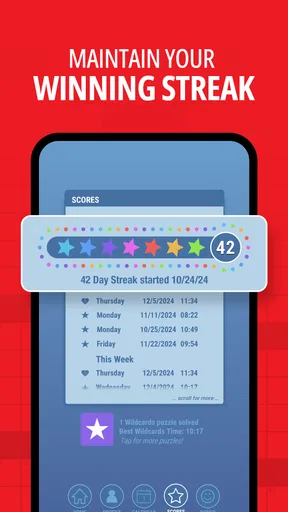
- Progress tracking encourages players to maintain a regular solving habit.
Limitations of Daily POP Crossword Puzzles
- Some puzzles may feel too easy for experienced crossword players.
- Hints and other helpful tools can reduce the challenge for purists.
- A stable internet connection may be needed for new puzzle content.
- Small clue text can be uncomfortable on phones with compact screens.
- Advertisements may interrupt play or take up valuable screen space.
Similar Picks in This Category
View All
Word Search - Word Puzzle Game
Bluetile4.8

Word Search Quest - Puzzles
Blackout Lab4.8

CodyCross: Crossword Puzzles
Fanatee, Inc.4.7

Words of Wonders: Crossword
Fugo Games4.9

Wordscapes: Word puzzle game
PeopleFun4.7

Word Search Explorer
PlaySimple Games4.9
Frequently Asked Questions
What is Daily POP Crossword Puzzles?
Daily POP Crossword Puzzles is a mobile word game built around crossword challenges inspired by popular entertainment, celebrities, television, movies, music, and current culture. Each puzzle combines familiar crossword mechanics with themed clues, making it approachable for casual players while still offering a satisfying challenge. New content is designed to encourage regular play, so it can become a convenient daily brain-training and entertainment routine.
Is Daily POP Crossword Puzzles free to download and play?
The app is generally available to download for free, allowing users to try its crossword content without paying upfront. However, free games may include advertising, optional purchases, or subscription-based features depending on the version and platform. Before downloading, review the store listing carefully to check what is included at no cost, whether hints or additional puzzles require payment, and how recurring subscriptions are handled.
Does the game require an internet connection?
An internet connection may be needed for downloading the app, receiving new puzzles, displaying advertisements, synchronizing progress, and accessing certain online features. Some previously loaded puzzles may remain playable offline, but this can vary according to the app version and device. If you plan to play while traveling or without mobile data, open the game beforehand and check which puzzles and features remain available offline.
Is Daily POP Crossword Puzzles suitable for beginners?
Yes, the game can be suitable for beginners because it uses the familiar crossword format and typically provides helpful tools such as hints, revealed letters, or other assistance when a clue becomes difficult. Nevertheless, knowledge of entertainment and pop-culture topics may affect the difficulty. Players who do not recognize a celebrity, show, song, or movie reference may need to use hints more often than experienced crossword fans.
Are there ads, in-app purchases, or privacy considerations?
Like many free-to-download puzzle games, Daily POP Crossword Puzzles may contain advertisements and optional in-app purchases for hints, extra content, or an ad-free experience. Availability and pricing can differ between Android and iOS. The app may also request permissions or collect usage information for functionality, analytics, or advertising. Check the current privacy policy and app-store permissions before installing, especially if you are concerned about personal data or recurring charges.
Play our best games!


